Twin - Futago Saturday, Mar 4 2006 

My wife just gave birth (caesarian) to a twin baby girl. Twins in Japanese is “Futago” as this will be today’s lesson :D. There won’t be any lesson in this 2 days as I have to accompany my wife for at least 2 days at the hospital. Hopefully my wife can be discharged on this Sunday. Now I have started to confuse who’s the elder and who’s the younger (1 minute different) as they looked the same. I need to refer to the tag to identify them by looking at the title, “Twin 1″ & “Twin 2″. Many people told me that after a month or so, I will get use to it and can easily identify the difference.

Akihabara Thursday, Mar 2 2006 

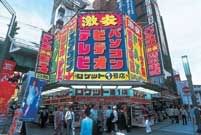
Akihabara, Tokyo’s world-famous Electric Town where you will find a wide range of comtemporary electric & electronic appliances at far cheaper prices than any where in Japan. If you have plan to go there, Akihara is a place where you shouldn’t miss this place.

More than 250 electrical appliances and electronics shops of all sizes are located in a small area around Chuo-dori Avenue, in the west of Akihabara Station. In recent years, the main trend has shifted from general home electrical appliances toward the new world of the internet.

This town began specializing in electrical equipment in the latter half of the 1940s, when people’s primary source of information was radio. In the beginning, many shops dealing in radio parts gathered under the elevated railroad of JR. Later, these shops began dealing with home electrical appliances, thus developing into the world’s biggest electrical equipment town.

With many service centers and the showrooms of major manufacturers, as well as duty-free shops and various events, the town is attractive in the eyes of visitors. Among these events, the Denki-matsuri Festival, held in summer and winter, is the biggest, a great chance for good shopping that you should never miss. Take the time to fully explore the wonderland.

To go there, the easiest way is to take subway / train (taxi fare is just too high).

Save Cost (1,100 yen - 77 mins)
- From Narita Airport >> Keisei Funabashi (Use Keisei Line Express - 46mins)
- Keisei Funabashi >> Funabashi (Walk - approx. 3 mins)
- Funabashi >> Akihabara (JR Sobu Line - 28 mins)

Save Time (2,070 yen - 64 mins)
- From Narita Airport >> Nippori (Use Keisei Line Express - 56mins)
- Nippori >> Akihabara (JR Yamanote - 8 mins)

One thing good about Japan is that you will never lost as the subway system is just too convenient. At first, it was a little confuse but as time goes, you will use to it.

Conversation Tuesday, Feb 28 2006 

Conversation 1
Kobayashi : I am hungry - Onaka ga (suku)sukimashita ne.
Tony : Yeah, very - Ee, tottemo.
Kobayashi : So, let’s go and eat at the nearby Soba restaurant - Jaa, chikaku no sobaya e (taberu)tabe ni ikimashou.
Meaning : Onaka (Stomach), Suku (Hungry), Tottemo (Very), Chikaku (Nearby), Sobaya (Soba Restaurant), Soba (A type of Japanese Mee)

Kobayashi : Don’t you plan to visit my house this Sunday? - Kondo no nichiyoubi, uchi e (asobu)asobi ni kimasen ka?
Tony : Yes, thank you. Is it near from here? - Hai, arigatou gozaimasu. Koko kara chikai desu ka?
Kobayashi : Yes, it takes 15 minutes by walk - Hai, (aruku)aruite 15 fun gurai desu.
Tony : I see, can you write me your address? - Naruhodo, juusho o (kaku)kaite (morau)moraimasen ka?
Kobayashi : Yes - Hai.
Meaning : Kondo (This time), Nichiyoubi (Sunday), Arigatou Gozaimasu (Thank You), Koko (Here), Chikai (Near), Aruku (Walk), Naruhodo (I see), Juusho (Address), Morau (Receive / Get)

Kobayashi : Isn’t this room hot? - Kono heya, (atsui)atsuku arimasen ka?
Tony : A bit hot - Chotto atsui desu ne.
Kobayashi : So, shall we open the window? - Jaa, mado o (akeru)akemashou ka?
Tony : No, please switch off that stove - Iie, sono suto-bu o (kesu)keshite kudasai.
Meaning : Kono (This), Heya (Room), Atsui (Hot), Chotto (A bit), Akeru (Open), Suto-bu (Stove), Kesu (Switch Off)

Kobayashi : Shall i make you coffee? - Ko-hi- o (ireru)iremashou ka?
Tony : Ya, Please - Ee, onegai shimasu.
Kobayashi : Milk and sugar, how would you prefer? - Miruku to satou wa dou shimashou ka?
Michael : No sugar but please add a little bit of milk only - Satou wa irimasen ga, miruku dake, sukoshi irete kudasai.
Kobayashi : How about you, Tony? - Toni san wa?
Tony : I like black coffee more - Watashi wa burakku no hou ga suki desu.
Kobayashi : Yes, understood. Only milk for Michael amd black for Tony - Hai, wakarimashita. Maikeru san wa miruku dake de, Toni san wa burakku desu ne.
Meaning : Ireru (Put in), Onegai Shimasu (Please - requesting for a favour), Miruku (Milk), Satou (Sugar), Dake (Only), Sukoshi (A little), Burakku (Black - for coffee use)

Certain words cannot be translated with their actual meaning in English. So I change a little to make it easier to understand.

~mashou - Let’s Sunday, Feb 26 2006 

~mashou” means “Let’s do something”. For example : Let’s play (Asobimashou). It is as simple as ABC ;)

Examples
Kobayashi : Today, where do you go? - Kyou, doko e (iku)ikimasu ka?
Tony : I will be going to Shinjuku - Shinjuku e ikimasu
Kobayashi : How about you? - Anata wa?
Michael : I will be going to Shinjuku too - Watashi mo Shinjuku e ikimasu
Tony : Then, let’s go together - Jaa, issho ni ikimashou ka?
Michael : Alright, let’s go - Ee, ikimashou
Meaning : Kyou (Today), Doko (Where), Issho ni (Together)

Other Examples
Let’s drink coffee at the coffee shop - Kissaten de ko-hi- o (nomu)nomimashou
Let’s erase off the words on the blackboard - Kokuban no ji o (kesu)keshimashou
Let’s sing Japanese songs - Nihongo no uta o (utau)utaimashou
Meaning : Kissaten (Coffee Shop), Kokuban (Blackboard), Ji (Words), Kesu (Erase), Uta (Songs), Utau (Sing)

~ni ikimasu Thursday, Feb 23 2006 

In english, “~te ikimasu” & “~ni ikimasu” is very much the same but in Japanese, they were different. “~te ikimasu” represents “doing something and go” where “~ni ikimasu” represents “go and do something”

Example
Kudamono o (kau)katte ikimasu - I will buy fruits to your place
Kudamono o (kau)kai ni ikimasu - I go and buy fruits

~ni ikimasu is a combination of the following scenario
Go to post office - Yuubinkyoku e ikimasu
Buy stamps - Kitte o kaimasu
I go and buy stamps at the post office - Yuubinkyoku e kitte o kai ni ikimasu
Meaning : Kitte (Stamps)

Other Examples
I go and play at friend’s house - Tomodachi no uchi e (asobu)asobi ni ikimasu
Who would you go and meet - Dare ni (au)ai ni ikimasu ka
Meaning : Tomodachi (Friend), Asobu (Play / Visit), Dare (Who), Au (Meet)

Well, in English we normally don’t use “go and” but just “Who would you meet”. Hope this is not too confusing.

Conversation Tuesday, Feb 21 2006 

Conversation time to cover what we have learned

Conversation 1
Kobayashi : Where are you going? - Doko e ikimasu ka?
Tony : I go to post office and send letter - Yuubinkyoku e (iku)itte, tegami o (dasu)dashite kimasu.
Meaning : Doko (Where)

Conversation 2
Kobayashi : Is everyone gathered? - Minna (atsumaru)atsumarimashita ka?
Tony : No, Michael is not here - Iie, Maikeru san wa imasen.
Kobayashi : Tony, please call Michael (and come back) - Toni san, Maikeru san (yobu)yonde (kuru)kite kudasai.
Meaning : Minna (Everyone / Everybody), Atsumaru (Gather), Yobu (Call)

Conversation 3
Tony : I go and make a call (and come back) for a while, is it alright? - Chotto denwa o (kakeru)kakete kimasu ga, ii desu ka?
Kobayashi : Ya, please - Ee, douzo.
Meaning : Chotto (A while / A moment), Denwa (Telephone), Denwa o kakeru (Make a call), Douzo (Please / Go ahead)

Conversation 4
Tony : Please wait for a while. I need to take my briefcase and coat at the classroom (and come back) - Chotto (matsu)matte kudasai. Kyoushitsu kara kaban to ko-to o (toru)totte kimasu.
Kobayashi : Then, I wait for you downstair - Jaa, kaidan no shita de (matsu)matte imasu ne.
Tony : Yes, will return soon - Hai, sugu (modoru)modorimasu.
Meaning : Matsu (Wait), Kyoushitsu (Classroom), Kaban (Briefcase), Ko-to (Coat), Toru (Take), Kaidan (Staircase), Shita (Down / Under), Sugu (Soon / Immediate), Modoru (Return)

Conversation 5
Kobayashi : Please bring me 3 cups of tea. Then, please deliver this to Tanaka at second floor - Ocha o mittsu (motsu)motte kite kudasai. Sorekara, 2 kai no Tanaka san ni kore o (todokeru)todokete kite kudasai.
Tony : Yes, understood - Hai, (wakaru)wakarimashita.
Meaning : Ocha (Tea), Mittsu (3), Motsu (Bring / Carry), 2 kai (2nd Floor), Todokeru (Forward / Deliver), Wakaru (Understand)

Enjoy your lesson !!!

~te ikimasu Sunday, Feb 19 2006 

The other day I shown you the usage of “~te kimasu” which mean “doing something and come back”. Today I will cover the opposite way - “Go and do something” (~te ikimasu).

Example
Go out from home - Uchi o (deru)demasu
Buy cake - Ke-ki o (kau)kaimasu
Go to friend’s house - Tomodachi no uchi e (iku)ikimasu
(I will) buy cake and go (to friend’s house)- Ke-ki o katte ikimasu

You only need to mention the purpose. In the above example, the purpose is to buy cake to a friend’s house. So you only need to mention that you are going out to buy cake.

Other examples
I go and put the luggage in the room - Heya ni nimotsu o (oku)oite ikimasu
I go and send letter at the post office - Yuubinkyoku de tegami o (dasu)dashite ikimasu
I go shopping at the department store in front of the station - Eki mae no depa-to de kaimono o (suru)shite ikimasu
Meaning : Heya (Room), Nimotsu (Luggage), Oku (Put), Yuubinkyoku (Post Office), Dasu (Send), Kaimono (Shopping)

Another usage - Doing something and go
I will take a train and go - Densha ni (noru)notte ikimasu
I will bring camera and go - Kamera o (motsu)motte ikimasu
I will wear coat and go - Ko-to o (kiru)kite ikimasu
Meaning : Densha (Train), Noru (Board - for transport), Kamera (Camera), Motsu (Bring), Ko-to (Coat), Kiru (Wear)

Hope it is not too confuse.

~te kimasu Thursday, Feb 16 2006 

Today, I will cover the usage of “~te kimasu” which means “Going out to do something and come back”

Example
Go out from home - Uchi o (deru)demasu.
Buy bread - Pan o kaimasu.
Go home - Uchi ni kaerimasu.
Combination : Pan o katte kimasu (I go out to buy bread back)
Meaning : Pan (Bread), Deru (Go out)

In english, we do not use this kind of phrase but in Japanese, whenever they are do “something and come back”, ~te kimasu is used.

Other Examples
I go drink water & come back - Mizu o (nomu)nonde kimasu
Let’s me have a look at the train schedule and come back - Densha no jikokuhyou o (miru)mite kimasu
I go meet a friend and come back - Tomodachi ni (au)atte kimasu
Meaning : Mizu (Water), Nomu (Drink), Densha (Train), Jikokuhyou (Schedule / Timetable), Tomodachi (Friend), Au (Meet)

Conversation Sunday, Feb 12 2006 

Conversation session time !!! I will cover conversation realted to time & date

Kobayashi : Where do you come from? - Doko kara kimashita ka?
Tony : I’m from America - Amerika kara kimashita
Kobayashi : When did you come? - Itsu goro kimashita ka?
Tony : Exacty 1 year ago - Choudo 1 nen mae ni kimashita
Kobayashi : How many hour it took by flight? - Hikouki de nan jikan gurai kakarimashita ka?
Tony : It took about 14 hours - 14 jikan gurai kakarimashita
Meaning : Doko (Where), Itsu (When), Goro (Around), Choudo (Exactly), Mae (Front), 1 nen mae (1 year ago), Hokouki (Flight / Aeroplane)

Kobayashi : What are you doing? - Nani o shite imasu ka?
Tony : I am studying Japanese Language - Nihongo o benkyou shite imasu
Kobayashi : You study from around what time? - Nan ji goro kara benkyou shite imasu ka?
Tony : I start at around 8 o’clock. When I reach home, I will start immediately after taking dinner - 8 ji goro kara desu. Uchi ni kaette, ban gohan o tabete kara, zutto benkyou shite imasu.
Kobayashi : So, you study for 2 hours, right? - Jaa, 2 jikan gurai desu ka?
Tony : Yes, about that long - Hai, sono gurai desu
Meaning : Benkyou (Study), Ban (Night), Ban Gohan (Dinner), Zutto (All the way / Continuously)

The 000-062 certification provides to implement virtual server and its clients by using IBM technologies. And 000-071 helps in RAID implementation. If you are seeking to gain skills in lotus then 190-722 will help you out. Certification 1D0-510 enables you with web development technologies and network foundations.

Time Saturday, Feb 11 2006 

Today, I will cover those words use for time / date.

From (Kara)
The school starts from 9 o’clock - Gakkou wa 9 ji kara (hajimaru)hajimarimasu.
What time is the departmental store open? - Depa-to wa nan ji kara akimasu ka?
The departmental store is open from 10am - Depa-to wa asa 10 ji kara akimasu.
Meaning : Hajimaru (Start), Asa (Morning), Aku (Open)

To / Until (Made)
The school hour is until 4 o’clock - Gakkou wa 4 ji made desu.
The departmental store is open until 10pm - Depa-to wa yoru 10 ji made (aku)aite imasu.
Meaning : Yoru (Night)

From & To
The school is open from 9 to 4 o’clock - Gakkou wa 9 ji kara 4 ji made desu.
The shop is open from 10am to 10pm - Mise wa asa 10 ji kara yoru 10 ji made aite imasu
I walk from house to the station - Uchi kara eki made (aruku)arukimasu
I go from airport to hotel by bus - Kuukou kara hoteru made basu de (iku)ikimasu
Meaning : Mise (Shop), Aruku (Walk), Kuukou (Airport), Basu (Bus), Hoteru (Hotel)

How long it take (Kakaru - Kakarimasu)
It takes 15 minutes to walk from home to the station - Uchi kara eki made aruite 15 fun kakarimasu
How long it takes from your house to the office - Uchi kara kaisha made dono gurai kakarimasu ka
It takes 1 hour from home to the office - Uchi kara kaisha made 1 jikan kakarimasu
Meaning : Fun (Minute), Gurai (About), Dono Gurai Kakarimasu (How long), Jikan (Hour)

Others
Shuukan - Week — Isshuukan (1 week)
Getsu - Month — Ikka getsu (1 month)
Nen - Year — Ichi nen (1 year)

Page 6 of 11« First...«45678»...Last »